
The Shadow We Cast
On shadow work, spiritual bypassing, collective grief, and the courage to know ourselves completely.

The Light-Bearer
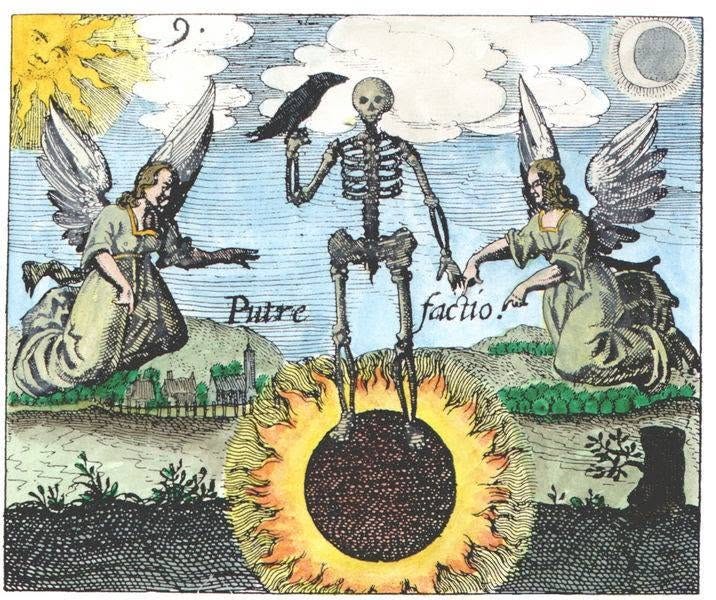
I listened to a podcast recently that hit the nail on the head about how we perceive light and dark. Why we are taught to avoid our shadows, and what that conditioning takes from our ability to know who we are.
The part that blew my mind was finding out what Lucifer means. Lucifer means light-bearer. The figure we were conditioned to fear, demonise, villainise carries a name that means the one who brings the light.
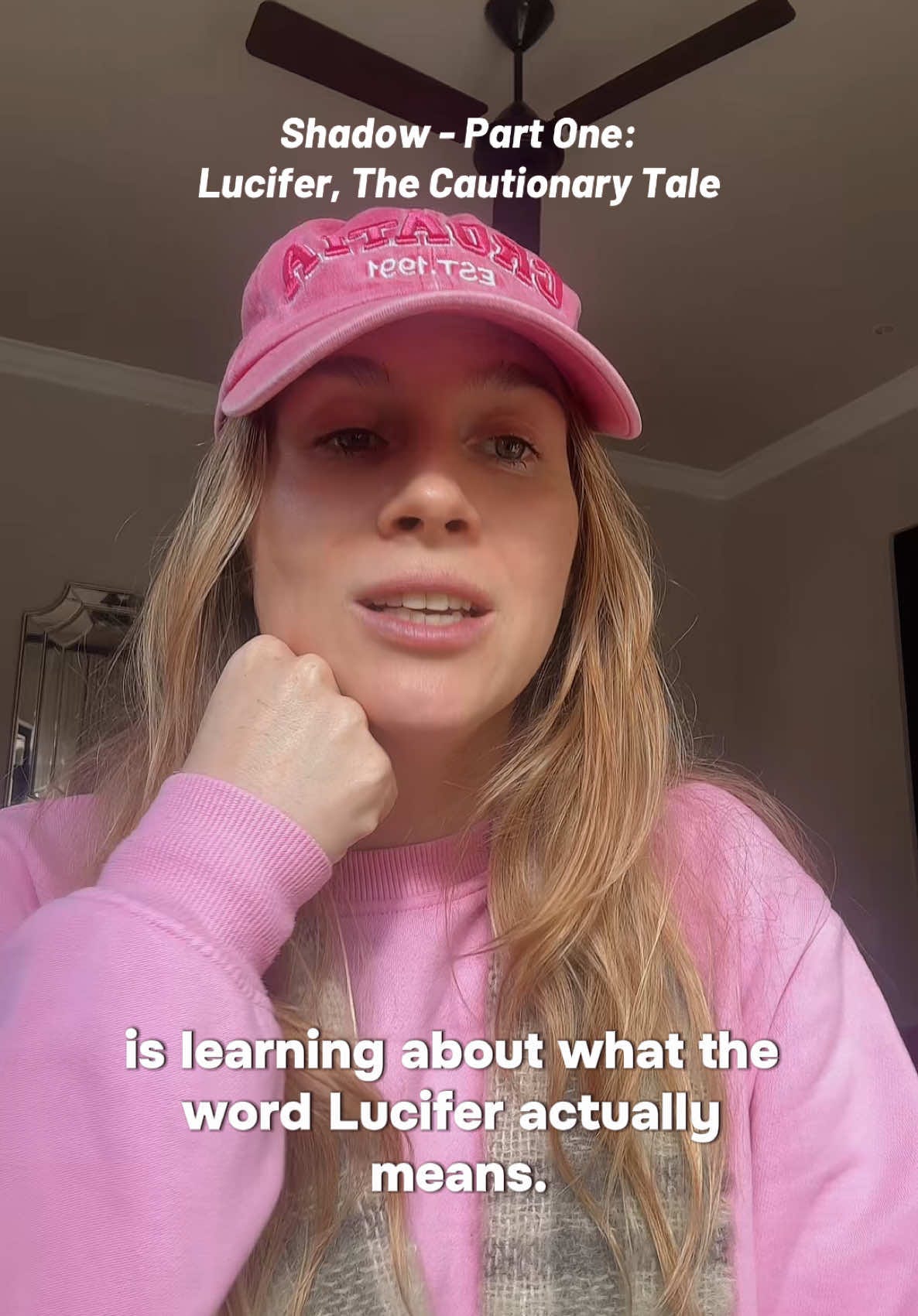
@colleen__murray Shadow - Part One: Lucifer, The Cautionary Tale
Sit with that for a moment. The most perfect being, the one closest to God, was cast out the moment they stopped performing the God-approved version of themselves. Lucifer did not turn evil. Lucifer stopped living as the role that had been placed on them and started living as a fuller, more honest version of who they were. Lucifer said I will not only be what you need me to be. The response was total rejection. Rebranded as the villain. Cast out, and made into the cautionary tale.
Making an Other
This story is the bedrock of so much of what we repress. Everything built on top of it adopted the same instruction. Perform the approved version, or be villainised, cast out, shamed. And we have been running on that same instruction inside ourselves ever since.
The shadow is Carl Jung’s word for the parts of the psyche we refuse to acknowledge, the material we bury because it clashes with the image we have agreed to present. It forms early on, as we learn which parts of us are welcomed and which are discouraged, and we adapt by hiding the rest. Shadow is anything you have disowned, or pretend does not exist. It can be the everyday things, the jealousy you will not acknowledge, the ambition you were taught to suppress, the grief you have denied. It can also be the most core parts of who you are. Who you love. How you exist in the world.
The ego performs the acceptable version of you, and the shadow holds everything that performance leaves out.
What you hide shows up in your body, your relationships, your health, how far you can grow. What we do not confront with light… festers.
The ego cannot tolerate shadow in others either. When someone stops performing, when they refuse the approved version of themselves, it threatens the suppression you have placed upon yourself. It holds up a mirror to the parts of you that you have worked so hard not to look at. That is uncomfortable. Uncomfortable enough, at times, to become judgement, and even rage. Jung understood this as projection, the way we attribute to other people the traits we cannot bear to confront in ourselves. The ones that provoke the strongest reaction in us are so often the ones we have buried. We are mystified by the intensity of our own response, when in truth it is our shadow, looking back at us through another’s face.
I wrote about this mirror in my poem called Yours to Sow:
Discomfort visits—not to sting, nor stifle your joy, nor ground your wings, but teach what shadow yearns to show: that growth requires highs and lows. It nourishes earth where sorrow falls, with tears that seed a healing call—shadow exists as proof of light, and darkness restores your inner sight.
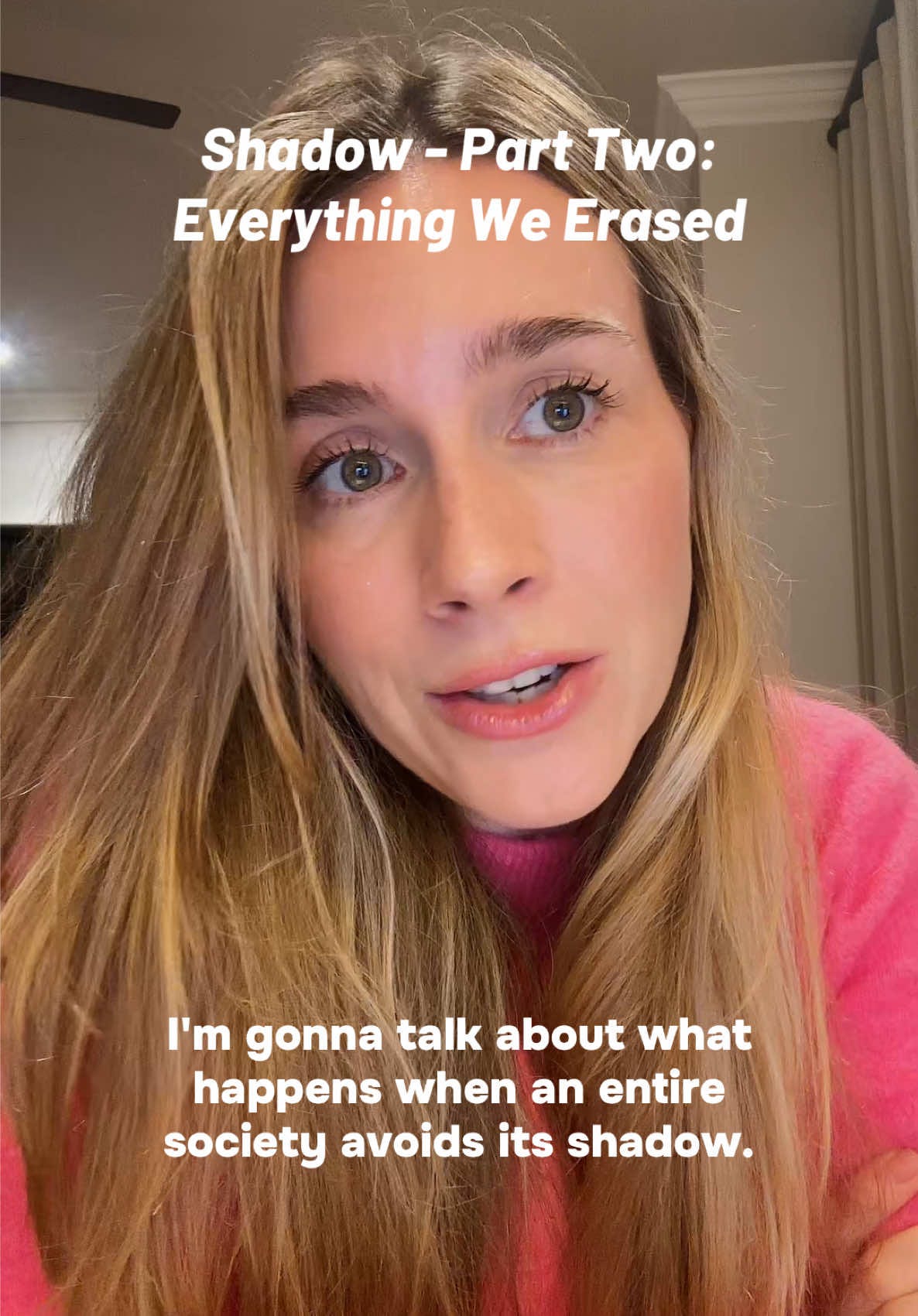
@colleen__murray Shadow - Part Two: Everything We Erased
Where the Shadow Goes
What happens when an entire society avoids its own shadow?
That shadow grows. It becomes insidious. It infiltrates our ways of life, our institutions, our relationships, our identities.
Look at what we have done throughout history to those who dared to exist outside the line. The healers, the herbalists, the people called witches, those who loved or lived against the grain, cast out and labelled and punished and killed. Maybe they were at the forefront of human evolution. Maybe they held knowledge we destroyed before we ever gave ourselves the chance to learn from it.
And we did not only lose those people. We lost what they knew. Indigenous wisdom, relationship with land, plant medicine, ancestral tradition, dismissed and dismantled. What could be commodified was taken, stripped of its resources and its authenticity, and sold to the highest bidder. What was freely given by the earth and by people, held as sacred and understood as invaluable, was seen as less because it existed outside the need for a transaction.
When violence arrives and tells you this is what evolution looks like, it is not evolution, it is force with no choice in it. The hand that comes with that kind of certainty has not come to understand you, or to live alongside you. It has come to extract and to control, fully convinced of its own superiority, blind to everything it cannot grasp. It wears the mask of a saviour. It arrives uninvited, certain that whatever stands in front of it needs saving. And so we cut ourselves off from whole knowledge systems and called it progress.
What Grief Becomes
This system needs you conforming.
It needs you consuming. Conformity is profitable, and those who lean into it the hardest take the most from it; status, power and control. Which means there is a vested interest in keeping you in line. We know how a society reacts to those who do not conform, because we have stood on both sides of it—we feel the pressure when we brush too close to the edges.
So look at your own life. Look at where you have been judgemental of someone, where you have cast someone out, where your rage at another’s freedom said more about your own cage than it ever did about them.
A cage that was placed upon you, and one you hold the key to unlock.
Jung understood that the shadow is personal and bigger than personal. Cultures carry one too. He wrote about how the collective shadow, left unexamined, fed the rise of totalitarianism in the twentieth century, and he held that going inward this way feeds the health of the places we live in, it is more than self-improvement. A society disowns what it cannot bear to face in itself, and then it finds the disowned part living in someone else. Scapegoating, nationalism, the violence of the crowd. A group takes its own darkness and hangs it on an other, who is made to bear the weight of what the group will not.
What we refuse to feel does not leave us. It waits, and it finds an escape. We have watched it in every generation and we are watching it still. One act of harm becomes the permission for a hundred more.
In Belfast, masked rioters drove migrant families out of the homes they had made a life in, made strangers carry a rage that was not theirs to hold. Whatever sets it off is rarely the real cause. The rage is already there, packed down, waiting for a body to land on. So often the family of the person first harmed will beg for it to stop, will say plainly that the strangers are not the enemy, and it changes nothing, because the violence had little to do with them. The crowd is emptying a grief it has no other place to put.
This is grief with no sanctioned outlet. The researcher Kenneth Doka gave it a name in 1989, disenfranchised grief, the loss that cannot be openly acknowledged, socially sanctioned, or publicly mourned. Unfelt loss curdles, and curdled grief looks for somewhere to discharge. It comes out as the rise of the right, which hands the disowned a target and calls it an answer. It comes out in the stadium. It comes out in the riot and the mob, in every crowd that finds a permitted place to put what it is otherwise forbidden to feel. We have built almost nowhere for a person, let alone a society, to hold the full weight of what they carry, so it leaks out sideways, and it lands on whoever has the least power to refuse it.
This is one thread, not the whole cloth. Grief is not the only thing driving the rage I am describing. There is money in it, and ideology, and people who profit from pointing the angry somewhere beneficial. But grief is the thread I want to follow, because—a lot of the time—it is the one we are least willing to pick up.
It’s the boy who learned that feelings make you weak, so the only thing he has left is anger. And there is an outlet waiting for him. It finds the impressionable boy and sells him a way to feel like a man, worth bought through dominance, through contempt for women, through pointing him toward the people with less power than him and naming them as the cause of all that is wrong with his life. It hands the grief a target and calls it strength. This child was robbed of his worth before he could even write or speak properly, and now it is being sold back to him at the cost of hurting others.
It’s the job that could be gone on Friday, nothing solid underneath you, because nothing solid was ever offered. It’s rent going up, and food going up, and the wages staying the same, and the feeling of trying harder year after year to stay in the same place. It’s being told you have nothing to complain about, as the weight of a trying life presses down on you—on a body that was never meant to carry this much. It’s being born at the bottom and working out that the ladder was pulled up before you got to it. None of that gets grieved. Because we will not let it be called a wound. They call it life, and they tell you to cope. That is the shadow too. The grief we buried, and also the harm being done to us right now and dressed up as normal.
The Looking Away
Some deaths arrive with names and faces and a story that breaks you. Others arrive as a number, if they arrive at all. The grief is disowned because to feel it would mean facing what was done, and who did it, and what we allowed to happen. So we look away, and the looking away has a cost. It is the collective shadow taking the comfort of not knowing. I have written about how this machinery operates in the open, about the hierarchy of grief and visibility and worth that decides whose suffering we are permitted to see. The severing I traced through the witch trials and through colonisation is not confined to the past. Today, land is still stripped, indigenous trees still felled, whole living systems, families, livelihoods, communities… all destroyed. We tell ourselves it is too complicated to have an opinion about it, that we do not know enough to speak on it, and that hesitation gets dressed up as humility when it is only the fear of grief wearing humility's coat. A loss prohibited from being felt does not disappear, any more than a private one does. It goes underground, and it returns as what we cannot understand, in both ourselves and in each other.
Love and Light
Everyone wants a spiritual awakening. Until the real one begins.
The real one does not look like what we have been sold. Jung said you do not become enlightened by imagining figures of light, but by making the darkness conscious. And yet we live in a world that sells us the light. Raise your vibration, transcend, ascend, and leave everything painful and unresolved sitting in the dark where it will not disturb the aesthetic.
The psychotherapist John Welwood called it spiritual bypassing, the use of spiritual ideas and practices to sidestep the wounds and the unfinished business we have not yet had the courage to face. He called it premature transcendence, the attempt to rise above the raw and messy side of our humanness before we have made peace with it. The cost of that gap, he said, is that we remain unripe. Our practice grows, but our life does not.
And there is Jung himself to reckon with. The shadow work sold in wellness spaces is individualised in a way the traditions it draws from are not. In 1925, Jung sat with a Pueblo elder at Taos who told him that white people looked uneasy, faces sharp, eyes always staring, always wanting more, restless and cruel, and that his people thought them mad. Jung called it one of the most important encounters of his life. He took what he learned home, and he built it into his work. And the shadow work being sold to you now, this private journey down into yourself, on your own, was taken out of soil it did not grow in. A scholar named Vine Deloria Jr. read Jung more closely than almost anyone, and he could not fully love him, or fully condemn him, because both were true. Jung built perhaps the only Western framework big enough to carry what indigenous cultures already understood. And to build it, he ran those same cultures through a European fantasy of the primitive, and shrank them into a stereotype. The healing in those understandings put the person back among others. Pain, grief and imbalance were held through relationship, with community, with ancestors, with land, with collective memory. What you were working toward was balance, accountability, reciprocity, connection, not a better version of yourself. Strip shadow work of all that and sell it back as a personal practice and you do the same thing again. You take what was communally held and sacred, lift the individual out of the whole, and call it healing.
Remembering Community
You can see the bypass everywhere once you learn to recognise it. I protect my energy. I do not watch the news. I don’t consume negativity. I protect my peace. Thoughts and prayers. Love and light. The suffering we scroll past because the complexity feels too heavy to hold. We have grown comfortable on the surface, and there are reasons for it. We carry so much unexamined pain that peeking behind the curtain feels like it might break us, so we avoid it altogether. We do not want to burst the comfortable bubble, and above all we do not want to feel burdened.
Think about who has had the luxury of avoidance. In wealthier areas, the state does the protecting, and that protection—a lot of the time—lets us off the hook for taking care about the people around us. Money buys more than that, though. It buys access to what the sociologist Ray Oldenburg called third places, the spaces between home and work where community happens. The gym. The cafe. The restaurant. The event. The therapy room. Each one has an entry fee, and each one is somewhere to belong. Marginalised communities were rarely given any of this. Shut out of banking, housing, healthcare, insurance and welfare, and priced out of the rooms where wealthier people gathered, people the world over built their own care where the state withheld it and attacked it.
Care you can buy is also care you can walk past. The muscle for it goes soft. But when your survival runs through the people next to you and theirs runs through you, walking past stops being an option. You cannot pay someone to stand in for you. You turn up, because the day you don’t is the day someone goes under, and one day that someone could be you.
The stokvel came because there was nothing else, and what people build when there is nothing else holds them in a way no paid service can.
In South Africa, the stokvel grew directly out of that exclusion. Under apartheid, Black South Africans were systematically shut out of formal banking and credit reserved for whites, and so communities pooled what little they had, rotating the payout so that one family at a time could bury a loved one, cover school fees, or put down money on a small business. Police raided stokvel gatherings as illegal shebeens and made arrests, more so under the state of emergency, when meeting at all was banned. People held each other up and were arrested for it. Underneath it ran ubuntu, I am because we are, the wellbeing of one person sitting inside the wellbeing of everyone.
This did not only happen in South Africa, and it is not only a Black story, though Black and colonised communities have carried it the longest and paid the most for it. People reach for each other wherever they have been forgotten. Mexicans call it the tanda, Kenyans the chama, Bangladeshis the samiti, the Caribbean and West Africa the susu, and the list runs on, most of it older than the borders drawn over it, carried across oceans by the people who had to leave. In Britain, the mutual building societies started in Birmingham in 1774 so a labourer might one day own the house he lived in. During the AIDS crisis, with governments looking the other way, queer communities built the medical care and the support and the dying networks themselves. Wherever the state walks away, the people it walked away from turn to each other.
Most of us raised inside that protection have rarely had to live this, and there is so much to learn from the people who did—and still do. Living in close obligation leaves the door to your shadow open, even if it cannot walk you through it, because the work starts with turning up, then putting yourself out, then sitting across from each other and saying what is true. I wrote about a version of this in my essay Wellness Without Conscience: “Grassroots movements organising against structural injustice understood that grounding and resistance were inseparable. Collective practices—meditation, yoga, prayer, shared ritual, embodied discipline—were…the conditions that made sustained confrontation possible.” What is sold to us now as 'love and light' was once how people kept themselves from being erased—and still is.
I am not saying the shadow does not exist in marginalised communities. It does. But the shadows that live in marginalised communities stem from more than grief: from the oppression of institutionalised religion, forced upon people through colonisation and imperialism.
The same closeness that holds a person up can be what keeps them trapped. A community turned outward, against what abandoned it, builds the net that catches you when you fall. Turned inward, that same closeness becomes the room you cannot leave. What decides the direction is who holds the power inside it. And so often that power is patriarchal, sometimes older than colonisation, sitting beneath the culture and religion that carried people through erasure. They held the language and the songs and a way home. But they also held the hierarchy, and handed it down in the same breath, and with the same authority.
We are allowed to grieve what was done to a community from the outside. We are far less willing to name what a community does to its own, to women, to children, under the cover of tradition. Both are the shadow.
I think to Ireland, because that is my home. They told us it was a famine. It was not a famine. A famine is when the food runs out, and the food did not run out. The potatoes failed, but everything else kept growing, and they took it all. Grain, cattle, butter, carried down to the ports under armed guard and shipped out of a starving country, past the people who had planted it, past ghostly children, while the men who ran the place wrote to one another about how the Irish had brought it on themselves and that feeding us would only make us soft. A million of us died with food moving past our mouths. A million more got on boats and were gone for good. And the ones who lived learned the price of survival. Don’t speak of it. Keep your head down. Be respectable. Be no trouble. Move forward. Make money. Get on with it. It was how you survived. You cannot stay inside what was done to you and still get up in the morning. So they didn’t. They moved on and built lives and told their children to do the same. Over time, what once sat naturally within Irish life began to carry shame. You learned to hide it, or leave it behind. You cannot carry what marks you out and survive the people who want you gone. Eight hundred years of being told you are inferior, of watching food leave the country past the mouths of your children—at a certain point, you start to believe it. That inferiority settles in. It gets passed down. Political independence alone did not resolve it. The Church laid claim to the structures of Irish life, recasting silence and conformity as virtue, and that silence compounded what was already buried. It held a broken people and it ruled them, and the holding is what made the ruling so hard to see. It took generations before Ireland could say it plainly: what was done was wrong, and we will not look away from it. People came back for themselves, for the land, the ancestry, the memory, the ways of living that held on through all of it. As it is seen, it gets named. The shame starts to be understood, and from that understanding we can at last see it was not Ireland's responsibility to carry, nor her people's. A colonised shadow holds on until you forge the courage to face it, hold it accountable in all its atrocity, and finally let yourself grieve, and heal.
That silence is not a metaphor. It is in how we say we're grand when we are not grand… at all. In the excessive drinking and drug use. In the way we make light of tragedy. In the depression that has no name in a family that does not name things. The grief was not allowed out, so it went where grief goes when you bury it alive… underground, and then into us. I am the great-great-grandchild of people who were not permitted to mourn, and I can feel what they buried. That is what a colonised shadow is. Not only the God they forced on us. It is everything we were not given the dignity to set down. And this is how it moves; a parent who cannot face their own shadow passes it along. They take it out on the child. It comes as control. As cruelty. As violence—the type that lives on in the body. The unspoken grief becomes the wound passed down. The child holds both: what happened to the parent, and what the parent did because they couldn't face it. Handed forward, body to body, blood to blood, still waiting to be acknowledged.
Befriending the Dark
Darkness is inevitable, and pretending it does not exist does not make it go away. It is like pretending we do not all eventually die. You do not want to think about it or speak about it, because it feels like too much, but turning away does not make death any less a part of life.
Life and death sit on two sides of the same coin, yet we welcome one and turn away from the other. We do the same with light and shadow, and the cost is just as painful.
What this work asks of you is something we rarely talk about, and rarely with much compassion. Going inward can mean your life looks different for a while. It can mean being out of your comfort zone, inconveniencing yourself, doing what you would have once refused. It can mean putting others before yourself, or yourself before others. It can mean some relationships do not survive the depths you are moving into. The life you hold on the surface may not look the same once you travel beneath it.
We avoid the shadow because we do not understand it, and this is where being held matters. A close friend who will sit by you. A circle of people you trust. A reliable and supportive community. An elder or family member—even nature. And yes, a therapist or a facilitator if that is within your reach, but the holding wasn't meant to be a product, it was meant to happen in relationship.
And what you are most afraid of finding is rarely what you find. The first step can feel the worst, like closing your eyes and falling backwards into an Alice in Wonderland spiral, out of control, the way most things feel when you move outside your comfort zone—which is where growth lives. The funny part is you might feel as though you are drowning when you are floating in the shallow end—the water only at your ankles. Change your perspective and you find you can stand.
The Return
You go into the dark and meet what lives there with friendliness, with love, with compassion. You say: you can exist, because you are part of me, I am not ashamed of you. And you take it by the hand. Then someone tries to bully you, to intimidate you, to bring you down, and you find you have already been there within yourself. You become like a great baobab. Ancient and immoveable. Roots so deep the storm does not find them. When the winds come you do not fall. You stand, because you have already survived the darkest of your own winters.

@colleen__murray ‘Yours to Sow’ by Colleen Murray 🌀🕊️💖 #poetry #capetown #womenoftiktok #poetrystatus #poetrystatus
Discomfort visits—not to sting, nor stifle your joy, nor ground your wings, but teach what shadow yearns to show: that growth requires highs and lows. It nourishes earth where sorrow falls, with tears that seed a healing call—shadow exists as proof of light, and darkness restores your inner sight.
You get one life. One life to know yourself, to know the world, to be at peace with it all. You can stay on the surface, or you can go deeper. That is your choice, your prerogative. To know yourself, all the way down, is a long journey of undoing and doing, of unlearning and learning. And it may be the greatest gift and honour you will ever give yourself.
To me, perfection embodied is existing fully within both the light and the dark, held together with complexity and honesty. As the lived experience of being human.
And I ask you; if you have befriended your darkness, what is left to scare you?
—C E Murray
Sources & References
Lucifer as lux + ferre, “light-bearer,” and the morning star — Roman usage and the Isaiah 14:12 Vulgate translation by Jerome.
The shadow, the persona, and projection — C. G. Jung, Two Essays on Analytical Psychology (Collected Works Vol. 7) and Aion (Collected Works Vol. 9ii).
The collective shadow, projection onto an “other,” and the psychology of totalitarianism — C. G. Jung, The Undiscovered Self (1957) and “After the Catastrophe” (Collected Works Vol. 10).
Disenfranchised grief — Kenneth J. Doka, Disenfranchised Grief: Recognizing Hidden Sorrow (1989).
“You do not become enlightened by imagining figures of light, but by making the darkness conscious” — C. G. Jung, The Philosophical Tree (Collected Works Vol. 13).
Spiritual bypassing and premature transcendence — John Welwood, Toward a Psychology of Awakening (2000), and Welwood interviews in Tricycle.
Jung’s 1925 visit to Taos Pueblo — C. G. Jung, Memories, Dreams, Reflections, ch. IX.
Critique of Jung’s Eurocentric idea of the “primitive,” held alongside genuine appreciation — Vine Deloria Jr., C.G. Jung and the Sioux Traditions: Dreams, Visions, Nature, and the Primitive (2009).
Stokvels as mutual aid born of exclusion from formal banking under apartheid; police mistaking gatherings for shebeens; the ubuntu foundation — H. Schulze, research on stokvels and social security (University of Pretoria); A. Lukhele, Stokvels in South Africa (1990); academic work on stokvels and ubuntu, Orange Farm study (SciELO South Africa).
Global rotating savings and mutual-aid traditions (tanda, chama, samiti, susu); UK mutual building societies (Birmingham, 1774); LGBTQ mutual aid networks during the AIDS crisis — Nonprofit Quarterly, “The Value of Susu” (2024); Transactions of the Institute of British Geographers (2022).
Yoga revived as anticolonial resistance during India’s independence movement — R. Polack, The Politics of Yoga (2014); scholarship on haṭha yoga and bio-political resistance.
Brené Brown: The Rage Bucket Theory — What Now? with Trevor Noah, hosted by Trevor Noah and Eugene, released 4 June 2026. Available on Spotify, Apple Podcasts and YouTube.
The hierarchy of grief, visibility and worth — Colleen E. Murray, A Thought Piece: Power, Identity & the War Behind the Headlines (2025).
Colleen E. Murray, Wellness Without Conscience.
The 1840s, food export under occupation, and the naming — grain, cattle and butter exported from Irish ports under guard while the population starved, and the official ideology that framed mass death as the market and the will of God (the providentialism associated with Charles Trevelyan): Christine Kinealy, This Great Calamity (1994) and A Death-Dealing Famine (1997); Cormac Ó Gráda, Black ‘47 and Beyond (1999). On the silence and what it does to the generations after: Cathal Póirtéir, Famine Echoes (1995); the intergenerational-trauma scholarship that sets Ireland beside the Oglala Lakota and Wounded Knee.
Ray Oldenburg and the concept of third places — Ray Oldenburg, The Great Good Place: Cafes, Coffee Shops, Bookstores, Bars, Hair Salons, and Other Hangouts at the Heart of a Community (1989, republished 2023). The term “third place” describes informal public gathering spaces between home (first place) and work (second place), including cafes, gyms, parks, and community centers, where people gather for connection and civic engagement. Oldenburg argues that access to third places is essential for community health and social cohesion.
Belfast — the June 2026 anti-immigrant unrest in Belfast, after a knife attack, in which masked crowds burned migrant families out of their homes; the victim’s family publicly called for the violence to stop and said migrants are not to be scapegoated. It follows the same pattern as the June 2025 Ballymena riots, where two-thirds of the Roma population fled the town.
The commodification of care and its effect on altruism and obligation — Regev-Messalem, S. (2022). “A new currency for paid care: Circles of reciprocity.” Gender, Work & Organization, drawing on Sandel’s theory that “altruism, generosity, solidarity and civic spirit are … more like muscles that develop and grow stronger with exercise.” The research shows that when care becomes fully commodified, it can diminish the altruistic expectations and obligations between community members. Mutual aid scholarship emphasizes the relational (not transactional) nature of reciprocal care built out of necessity: Sustainable Economies Law Center, Mutual Aid Toolkit (2020); Dean Spade, Mutual Aid: Building Disaster Communism (2020).
Rage as structural. On boys raised out of feeling until anger is the only door open: bell hooks, The Will to Change: Men, Masculinity, and Love (2004). On the class, precarity, mental-health and mortality nexus: Anne Case & Angus Deaton, Deaths of Despair and the Future of Capitalism (2020).
“shadow exists as proof of light, and darkness restores your inner sight” and the quoted stanzas are from the author’s poem, “Yours to Sow” — https://open.substack.com/pub/colleenmcreative/p/yours-to-sow